
Termites are one of the most destructive pests that can invade a home. Unlike cockroaches or ants, termites often work silently behind walls, beneath floors, and inside wooden structures, causing extensive damage before homeowners even realize they have a problem.
For villa owners in Dubai, termite infestations can be particularly costly. Many villas contain wooden doors, cabinets, pergolas, wardrobes, flooring, and decorative features that termites feed on. The warm climate and year-round temperatures in Dubai create favorable conditions for termite activity, making regular inspections essential.
In this guide, we’ll explain the most common signs of termites in Dubai villas, why they are a serious concern, and what homeowners should do if they suspect an infestation.
Why Are Termites Common in Dubai Villas?
Dubai’s climate provides ideal conditions for termites to survive and reproduce. Subterranean termites, which are the most common type found in the UAE, live underground and build protective mud tunnels to reach food sources.
Many residential communities in Dubai, including Arabian Ranches, Jumeirah, Al Barsha, Mirdif, Dubai Hills, The Springs, and Emirates Hills, feature villas with wooden structures that can attract termites if preventive measures are not in place.
Since termites often remain hidden, an infestation can continue for months or even years before visible damage appears.
10 Warning Signs of Termites in Dubai Villas
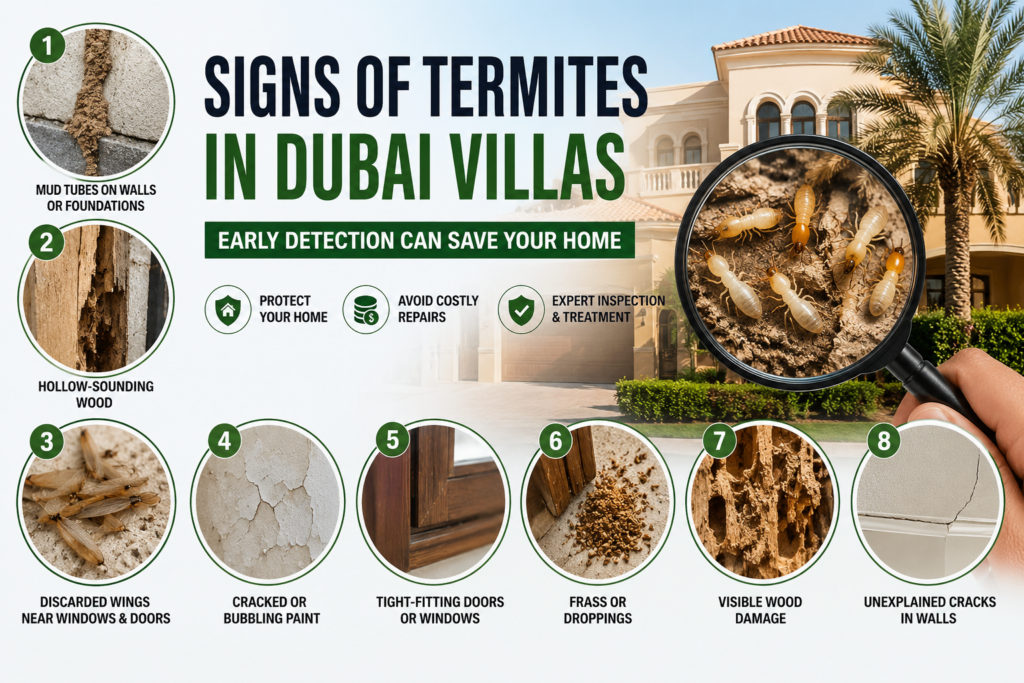
1. Mud Tubes Along Walls and Foundations
Mud tubes are one of the most obvious signs of termite activity.
These narrow tunnels are constructed from soil, wood particles, and termite saliva. They allow termites to travel safely between their underground colony and your home while protecting them from heat and dehydration.
You may notice mud tubes:
- Along exterior walls
- Around foundations
- On garden walls
- Near utility pipes
- Inside garages or storage areas
If you find mud tubes, avoid removing them immediately. A professional inspection can determine whether the colony is still active.
2. Hollow-Sounding Wooden Structures
Termites consume wood from the inside out, leaving only a thin outer layer intact.
Common areas affected include:
- Wooden doors
- Door frames
- Wardrobes
- Kitchen cabinets
- Wooden flooring
- Staircases
Tap suspicious wooden surfaces with a screwdriver or similar object. If they sound hollow or papery, termites may be feeding inside.
3. Doors and Windows Becoming Difficult to Open
Many homeowners assume sticking doors and windows are caused by humidity or aging.
However, termite activity can introduce moisture into wooden structures, causing them to warp and swell.
If doors or windows suddenly become difficult to open or close, especially when combined with other warning signs, a termite inspection may be necessary.
4. Discarded Wings Around the Villa
When termite colonies mature, they produce winged reproductive termites known as swarmers.
After finding a suitable location to establish a new colony, these termites shed their wings.
You may find piles of transparent wings:
- Near windows
- Around doors
- On balconies
- Close to outdoor lighting
- In garages
Discarded wings are often one of the earliest visible signs of a nearby termite colony.
5. Cracked Paint or Bubbling Walls
Termites create moisture while tunneling through structures.
This moisture can cause paint to:
- Bubble
- Peel
- Crack
- Appear uneven
Because these symptoms resemble water damage, termite infestations are frequently overlooked during the early stages.
6. Visible Damage to Wooden Furniture
Termites don’t only attack structural wood. They can also infest:
- Wooden tables
- Bookshelves
- Cabinets
- Bed frames
- Decorative wooden items
Look for:
- Tiny holes
- Weak surfaces
- Crumbling wood
- Unusual grooves
Furniture damage may indicate a larger infestation elsewhere in the villa.
7. Clicking Sounds Inside Walls
Although termites are tiny, large colonies can sometimes produce audible sounds.
Soldier termites communicate danger by tapping their heads against wood, creating faint clicking noises.
In quiet rooms, homeowners occasionally hear these sounds coming from walls or wooden structures.
8. Sagging Floors or Ceilings
As termites weaken structural timber, flooring and ceilings may begin to sag.
This is considered an advanced sign of infestation and requires immediate professional attention.
Ignoring structural damage can lead to expensive repairs and safety concerns.
9. Frass or Termite Droppings
Certain termite species leave behind small pellet-like droppings known as frass.
These droppings often resemble:
- Sawdust
- Coffee grounds
- Tiny wood-colored pellets
Finding frass near wooden structures can indicate active termite feeding.
10. Unexplained Cracks in Walls
As termites damage support structures, pressure can develop within walls and ceilings.
This may result in:
- Hairline cracks
- Uneven wall surfaces
- Loose tiles
- Damaged skirting boards
Although cracks can occur for many reasons, they should never be ignored when other termite signs are present.
Areas of a Dubai Villa Most Vulnerable to Termites
Homeowners should regularly inspect:
- Wooden doors and frames
- Kitchen cabinets
- Wardrobes
- Roof structures
- Garden pergolas
- Wooden fences
- Storage rooms
- Outdoor sheds
- Flooring
- Utility areas
Early detection often starts with routine visual inspections.
How Much Damage Can Termites Cause?
Termites feed continuously, 24 hours a day.
Over time, they can damage:
- Structural timber
- Flooring systems
- Wall supports
- Furniture
- Decorative woodwork
In severe cases, repairs can cost thousands of dirhams and may require extensive renovation work.
How to Prevent Termites in Dubai Villas
Prevention is always more affordable than treatment.
Reduce Moisture
Repair leaking pipes, taps, and irrigation systems promptly.
Remove Wood-to-Soil Contact
Avoid placing wooden structures directly against soil whenever possible.
Schedule Annual Inspections
Professional inspections help identify termite activity before major damage occurs.
Seal Entry Points
Close gaps around pipes, utility lines, and foundations where termites may gain access.
Keep Gardens Maintained
Avoid excessive mulch and decaying wood near your villa’s exterior walls.
When Should You Call a Professional Termite Control Company?
You should contact a pest control specialist immediately if you notice:
- Mud tubes
- Discarded wings
- Hollow wood
- Structural damage
- Unusual wall cracks
- Signs of termite activity around wooden furniture
Professional termite treatment service includes detailed inspections, colony detection, targeted treatment methods, and long-term monitoring to protect your property.
Final Thoughts
Termites are often called “silent destroyers” because they can cause extensive damage before becoming visible. Knowing the signs of termites in Dubai villas can help homeowners identify infestations early and avoid costly structural repairs.
If you notice mud tubes, hollow wood, discarded wings, damaged furniture, or other warning signs, arranging a professional termite inspection as soon as possible is the safest course of action. Early intervention can save your villa, protect your investment, and provide long-term peace of mind.
Think you may have termites in your villa? Best Pest Control Dubai provides thorough inspections and effective treatments across Dubai. Contact us today to schedule an inspection and protect your property from costly termite damage. Follow us on Facebook and Pinterest for expert pest prevention tips and updates.