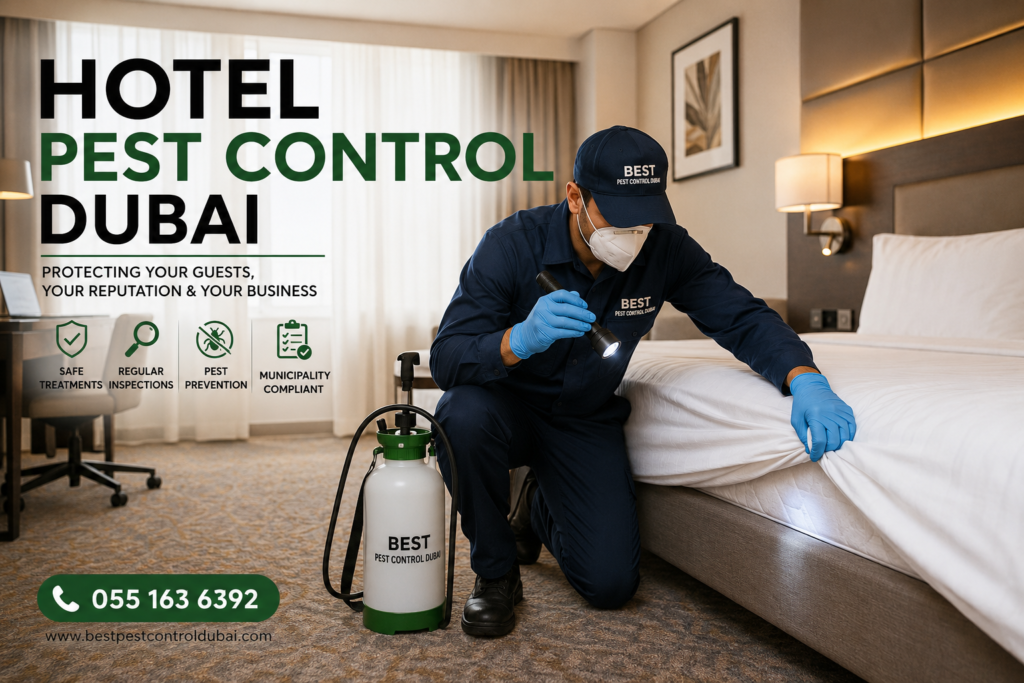
Hotels in Dubai welcome thousands of guests every day. Whether it’s a luxury resort on Palm Jumeirah, a business hotel in Deira, or a boutique property in Downtown Dubai, maintaining a clean and pest-free environment is critical.
Even a single cockroach, bed bug, or rodent can lead to negative online reviews, guest complaints, health violations, and significant financial losses.
Professional hotel pest control in Dubai is not just about eliminating pests—it’s about protecting your guests, your reputation, and your business.
Why Hotels in Dubai Are Vulnerable to Pest Problems
Dubai’s climate creates ideal breeding conditions for many pests.
Hotels also provide everything pests need:
- Continuous food supply
- Laundry rooms
- Kitchens
- Waste disposal areas
- High guest turnover
- Luggage arriving from different countries
- Storage rooms
- Utility areas
- Warm indoor temperatures
These conditions make hotels attractive to numerous pests throughout the year.
Common Hotel Pests in Dubai
4
Cockroaches
Cockroaches are among the biggest concerns for hotels.
They commonly hide inside:
- Kitchens
- Restaurants
- Laundry rooms
- Staff accommodation
- Utility shafts
- Drainage systems
Besides contaminating food, cockroaches spread bacteria that may affect guest health. Know about different types of cockroach found in UAE.
Bed Bugs
Bed bugs are every hotel’s nightmare.
They spread through:
- Guest luggage
- Clothing
- Furniture
- Mattresses
- Public seating areas
Just one online review mentioning bed bugs can seriously damage a hotel’s reputation.
Rodents
Rats and mice often enter hotels through:
- Parking areas
- Sewage systems
- Loading docks
- Service entrances
Rodents contaminate food, chew electrical wiring, and spread diseases.
Flies
Restaurants and buffet areas often experience:
- House flies
- Fruit flies
- Drain flies
These pests affect hygiene and guest experience.
Termites
Luxury hotels often use expensive wooden interiors.
Without regular inspections, termites can quietly damage:
- Wooden flooring
- Decorative panels
- Furniture
- Doors
- Storage areas
Why Hotel Pest Control Is Essential
Ignoring pests can result in:
- Negative Google Reviews
- Poor TripAdvisor ratings
- Guest complaints
- Health risks
- Dubai Municipality violations
- Revenue loss
- Room closures
- Brand reputation damage
Preventive pest management is significantly more cost-effective than dealing with a major infestation.
Areas That Need Regular Hotel Pest Control
Every part of a hotel requires monitoring.
Guest Rooms
Regular inspections help detect:
- Bed bugs
- Ants
- Cockroaches
Hotel Kitchens
The kitchen is the highest-risk area because of:
- Food preparation
- Grease
- Moisture
- Waste
Professional treatments help maintain hygiene standards.
Restaurants
Dining areas should remain completely pest-free to protect customer confidence.
Laundry Rooms
Warm and humid environments attract cockroaches and insects.
Waste Collection Areas
Garbage rooms often become breeding grounds if not treated regularly.
Storage Rooms
Stored food, linens, and packaging materials can attract rodents and insects.
Staff Accommodation
Staff housing should be included in the pest management program to prevent infestations from spreading into guest areas.
Signs Your Hotel Needs Pest Control
Watch for:
- Cockroach droppings
- Live insects
- Rodent noises
- Gnaw marks
- Dead insects
- Guest complaints
- Musty odors
- Bite reports
- Damaged food packaging
Even one sign deserves immediate inspection.
Professional Hotel Pest Control Process
1. Property Inspection
Experts inspect:
- Guest rooms
- Kitchens
- Restaurants
- Laundry facilities
- Basements
- Roof spaces
- Utility rooms
2. Pest Identification
Every pest requires a different treatment strategy.
3. Customized Treatment
Treatments may include:
- Gel baiting
- Residual spraying
- Dust application
- Rodent bait stations
- Fly control systems
- Bed bug treatment
4. Monitoring
Routine inspections ensure pests do not return.
5. Preventive Maintenance
Monthly or quarterly pest control helps maintain long-term protection.
How Often Should Hotels Schedule Pest Control?
Professional hotels generally benefit from:
| Hotel Area | Recommended Frequency |
|---|---|
| Guest Rooms | Monthly inspection |
| Kitchen | Monthly treatment |
| Restaurant | Monthly |
| Laundry | Every 1–2 months |
| Storage | Monthly |
| Waste Area | Monthly |
| Exterior | Monthly |
The exact schedule depends on the hotel’s size, occupancy, and risk profile.
Tips to Prevent Pest Infestations in Hotels
- Inspect guest rooms regularly.
- Train housekeeping to report pest activity.
- Seal cracks and entry points.
- Keep kitchens spotless.
- Remove waste frequently.
- Store food properly.
- Repair plumbing leaks promptly.
- Inspect luggage storage areas.
- Use professional monitoring devices.
- Schedule routine inspections.
Case Study: Preventing Bed Bugs in a Dubai Boutique Hotel
A 70-room boutique hotel in Deira began receiving occasional guest complaints about insect bites. During an inspection, technicians identified early signs of a bed bug infestation in three rooms, likely introduced through guest luggage.
The hotel temporarily closed the affected rooms, carried out targeted bed bug treatments, inspected neighboring rooms, and introduced routine mattress inspections as part of housekeeping procedures. Staff also received training on identifying early signs of bed bugs.
Following these measures, no further bed bug complaints were reported over the next six months, and the hotel avoided wider disruption to its operations.
Why Choose Professional Hotel Pest Control Instead of DIY?
DIY products often provide temporary relief but may not eliminate hidden infestations.
Professional services offer:
- Thorough inspections
- Targeted treatments
- Safer application methods
- Ongoing monitoring
- Preventive strategies
- Documentation for maintenance records
For hotels, prevention and early intervention are essential to maintaining guest confidence.
Frequently Asked Questions
Is hotel pest control safe for guests?
When treatments are carried out by trained professionals following label instructions and safety procedures, they can be planned to minimize disruption to guests.
Can hotels remain open during pest control?
Many routine treatments can be scheduled in phases or during low-occupancy periods. Some specialized treatments, such as extensive bed bug remediation, may require temporary room closures.
How long does hotel pest control take?
Routine inspections and standard treatments typically take a few hours, while larger infestations may require multiple visits.
Which pest is most common in Dubai hotels?
Cockroaches and bed bugs are among the most frequently reported issues, although rodents and flies can also be problematic depending on the property’s layout and operations.
How often should hotels have pest inspections?
Monthly inspections are commonly recommended for hotels due to the constant flow of guests and food service activities.
Protect Your Hotel’s Reputation with Professional Pest Control
In the hospitality industry, guest satisfaction depends on cleanliness, comfort, and safety. A proactive pest management program helps reduce the risk of infestations, supports hygiene standards, and protects your hotel’s reputation.
Whether you operate a small boutique hotel or a large luxury resort, routine inspections and preventive pest control can help ensure guests enjoy a comfortable, pest-free stay.
Contact us Now ,for all the types of Pest Control Service all over UAE.