Warehouses play an essential role in Dubai’s supply chain, from storing food and packaged goods to managing retail inventory, electronics, furniture and industrial materials. However, large storage areas, frequent deliveries, loading bays and concealed spaces can create opportunities for pests to enter and spread.
At Best Pest Control Dubai, we help businesses address warehouse pest problems through inspection-led treatment and practical prevention measures. Our approach focuses on identifying pest activity, locating potential entry points and developing suitable solutions for the type of facility and its operations.
Whether you manage a distribution centre, logistics warehouse, storage unit or commercial inventory facility, effective warehouse pest control in Dubai can help protect stored goods, maintain hygienic conditions and reduce the risk of recurring infestations.
Contact our team to discuss your warehouse’s pest-control requirements and arrange an inspection.
Why Is Warehouse Pest Control Important?
A pest problem in a warehouse can affect more than the cleanliness of the premises. Rodents and insects may damage packaging, contaminate vulnerable products, create operational disruptions and lead to additional cleaning or stock-handling costs.
Warehouses also have areas that are difficult to inspect during everyday operations, including spaces behind storage racks, beneath pallets, around service pipes and near loading doors.
A suitable pest-management plan helps businesses identify these risks before they become more difficult to control.
Key benefits include:
- Protection of stored goods: Reduce the risk of pest damage to packaging, inventory and susceptible products.
- Improved hygiene: Address pest activity around waste areas, storage zones and staff facilities.
- Early detection: Identify signs of infestation before pest activity spreads across the facility.
- Reduced recurrence: Address entry points, harbourage areas and conditions that attract pests.
- Operational continuity: Plan inspections and treatments around warehouse activities where practical.
- Better pest monitoring: Maintain inspection records and follow-up recommendations where required.
Common Warehouse Pests in Dubai
Different warehouse environments attract different pests. The correct control method depends on the pest species, the level of activity and the materials being stored.
1. Rodents
Rats and mice can enter through gaps around doors, service penetrations, damaged seals and other openings. They may hide behind stored goods, beneath pallets or in areas with limited human activity.
Signs of rodent activity include droppings, gnaw marks, damaged packaging, nesting materials and repeated sightings.
Rodent management may include inspecting entry points, identifying activity routes, using suitable control devices and recommending proofing measures to help prevent further access.
2. Cockroaches
Cockroaches can shelter in dark, warm and humid locations, including drainage areas, staff kitchens, waste storage zones and gaps around plumbing.
They may be introduced through incoming packaging or move between connected areas. Regular inspections and appropriate treatment can help identify harbourage points and reduce activity.
3. Stored-Product Insects
Certain beetles and moths can infest susceptible food products, grains, dry ingredients and other vulnerable stored materials. Infestations may originate in incoming goods or develop when affected stock remains in storage.
Inspection should consider product condition, packaging integrity, storage practices and any signs of insect activity. Suspected affected stock should be assessed and handled according to applicable food-safety and business procedures.
4. Ants and Other Crawling Insects
Ants may enter warehouses in search of food, moisture or shelter. They can follow structural edges, pipework and gaps around doors.
Other crawling insects may also appear where moisture, waste or suitable harbourage conditions are present. Correct identification helps determine the appropriate treatment and prevention measures.
5. Flies and Flying Insects
Flies can become a concern around loading bays, waste collection areas, open doors and locations where food residue or standing water is present.
Management may involve identifying the source, improving waste handling, addressing moisture problems and using suitable insect-control measures.
Our Warehouse Pest Control Process
Every warehouse has different storage arrangements, operating hours and pest risks. We recommend an inspection-led approach rather than relying on the same treatment for every facility.
Step 1: Warehouse Inspection
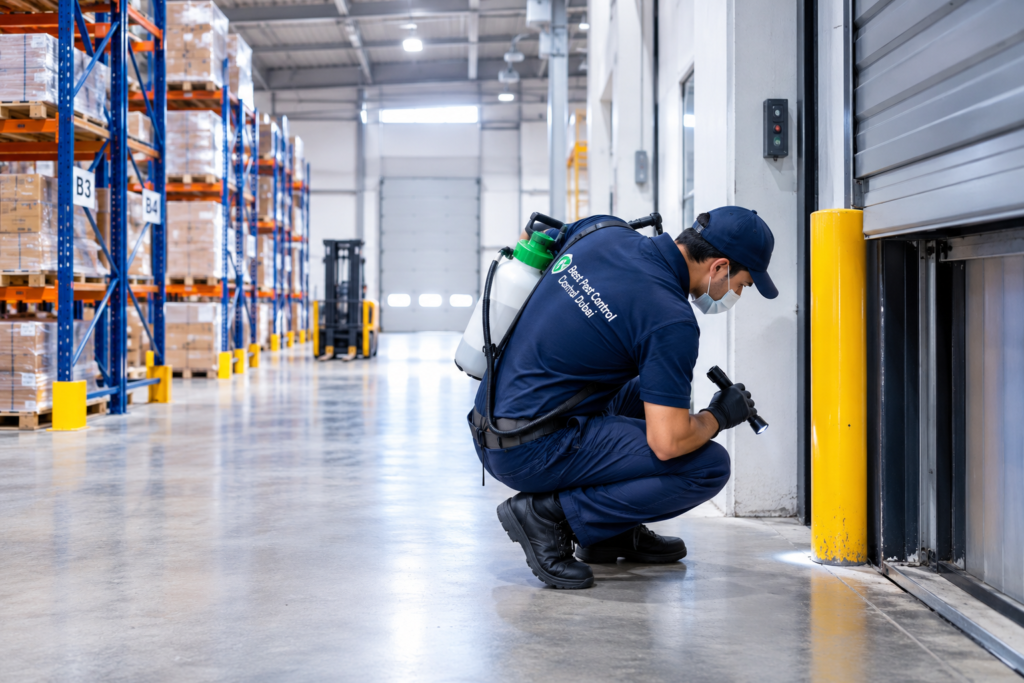
The inspection focuses on accessible storage areas, loading bays, entry points, waste zones and other locations relevant to the reported pest problem.
We look for visible pest activity, droppings, damaged packaging, possible harbourage areas and conditions that may contribute to an infestation.
Step 2: Pest Identification and Risk Assessment
Identifying the likely pest is important because rodents, cockroaches and stored-product insects require different control strategies.
The assessment also considers the type of inventory stored, the presence of food products, staff access and any sensitive equipment or materials.
Step 3: Appropriate Treatment
Based on the findings, a suitable treatment plan can be recommended. Depending on the pest and facility, this may involve targeted applications, traps, monitoring devices, approved baiting methods or other appropriate control measures.
Treatment selection should account for stored goods, employee safety, operational requirements and applicable product instructions.
Step 4: Entry-Point and Hygiene Recommendations
Treatment alone may not resolve the underlying cause of an infestation.
We may recommend improving door seals, closing suitable gaps, managing waste more effectively, reducing unnecessary cardboard accumulation and correcting moisture issues that attract pests.
Step 5: Follow-Up and Monitoring
Some infestations require further inspection or follow-up treatment. Monitoring helps assess pest activity after the initial intervention and determine whether additional action is needed.
Where appropriate, businesses can use inspection records and monitoring results to identify recurring problems and improve preventive measures.
Warehouse Pest Prevention Tips
A consistent prevention routine can help reduce the risk of pests entering and establishing themselves inside a warehouse.
- Inspect incoming goods and packaging for signs of insects or rodents.
- Keep stock organised and avoid storing goods directly against walls where this prevents effective inspection.
- Maintain clear access to inspection points around storage racks and perimeter areas.
- Keep loading doors closed when they are not in use, where operationally practical.
- Repair damaged door seals and address suitable gaps around service pipes.
- Remove waste and discarded packaging regularly.
- Clean food preparation and staff break areas consistently.
- Investigate water leaks, condensation and other moisture sources.
- Rotate stock and investigate damaged or suspicious packaging.
- Record pest sightings and report recurring activity promptly.
These measures support professional pest management but do not replace treatment when an established infestation is present.
Warehouse Pest Control for Different Facilities
Logistics and Distribution Centres
Frequent vehicle movements and deliveries can increase the opportunity for pests to enter. Inspections should consider loading docks, incoming packaging, waste areas and perimeter access points.
Food and Dry-Goods Warehouses
Facilities storing food or ingredients may require additional attention to stored-product pests, packaging integrity and hygiene practices. Treatment must be selected carefully to protect products and comply with applicable food-safety requirements.
Retail and E-commerce Storage Facilities
Cardboard packaging, high stock turnover and large storage racks can make early pest detection difficult. Monitoring and routine inspections can help identify problems before they affect more inventory.
Industrial and General Storage Warehouses
These facilities may contain equipment, spare parts, raw materials and other commercial goods. Pest management should consider the building layout, stored materials, employee access and potential rodent entry points.
Why Choose Best Pest Control Dubai?
Warehouse pest management requires an understanding of the facility, its stock and the way goods move through the premises.
Our approach focuses on:
- Inspection-led recommendations based on the reported pest problem.
- Suitable treatment options for the pest species and warehouse environment.
- Practical advice on entry points, hygiene and pest prevention.
- Consideration of stored goods and day-to-day operations.
- Follow-up recommendations where further monitoring or treatment is needed.
The recommended service and treatment schedule will depend on the inspection findings and the requirements of your facility. Any licensing, treatment guarantees or regulatory approvals should be confirmed for the specific service provided.
Frequently Asked Questions
How much does warehouse pest control cost in Dubai?
The cost depends on the warehouse size, pest species, severity of the infestation, treatment requirements and whether ongoing monitoring is needed. An inspection helps establish a suitable scope of work and quotation.
How often should a warehouse be inspected for pests?
The appropriate frequency depends on the facility’s risk profile, stored materials, pest history and any applicable industry requirements. Warehouses handling food or susceptible products may need more structured monitoring than lower-risk storage facilities.
Can warehouse pest control be carried out during operating hours?
In some cases, yes. The timing depends on the treatment method, affected areas, staff access and product safety instructions. Certain treatments may require restricted access or a planned treatment window.
How can rodents be prevented from entering a warehouse?
Prevention may include repairing gaps, maintaining suitable door seals, managing waste, inspecting deliveries and monitoring areas where rodents may travel or shelter. The best measures depend on the building and the source of activity.
Is warehouse pest control suitable for food-storage facilities?
Yes, provided the control programme is designed for the facility and its stored products. Treatment methods must be selected with appropriate attention to food safety, contamination prevention and applicable requirements.
Will one treatment permanently eliminate warehouse pests?
No single treatment can guarantee permanent protection. Results depend on the pest, infestation level, entry points, surrounding conditions and follow-up measures. Ongoing monitoring and prevention may be necessary.
Arrange Warehouse Pest Control in Dubai
Pest activity can become more difficult to manage when it remains undetected around stored goods, loading bays and concealed warehouse spaces.
Best Pest Control Dubai can help you assess the problem and identify suitable treatment and prevention measures for your facility.
Contact our team to discuss your warehouse requirements, arrange an inspection and receive a service recommendation tailored to your premises.
Protect your warehouse with a pest-management plan designed around your facility, stored goods and daily operations.